
The Tonga Room
Anthony Bourdain called it "the greatest place in the history of the world"

My family has the interesting and laughably secular tradition of hitting San Francisco’s Tonga Room on Christmas Eve in anticipation of midnight mass at Grace Cathedral.
But don’t worry, the night is not just Mai Tais and mass.
We start with dinner in Chinatown and always make sure to do our obligatory round to all the holiday decorations Nob Hill has to offer first, like totally normal members of society.
Only then do we patronize the dark restaurant and tiki bar on the bottom level of the Fairmont Hotel to sip rum drinks and hit the dance floor in our church attire.
And by 10:30, we’re on our way to Grace to celebrate the birth of Jesus among the people of our city in a sophisticated manner.
Needless to say, my sisters and I have always loved the Tonga Room. Even before alcoholic beverages were on my radar, I remember admiring this place with total curiosity and awe as a kid.
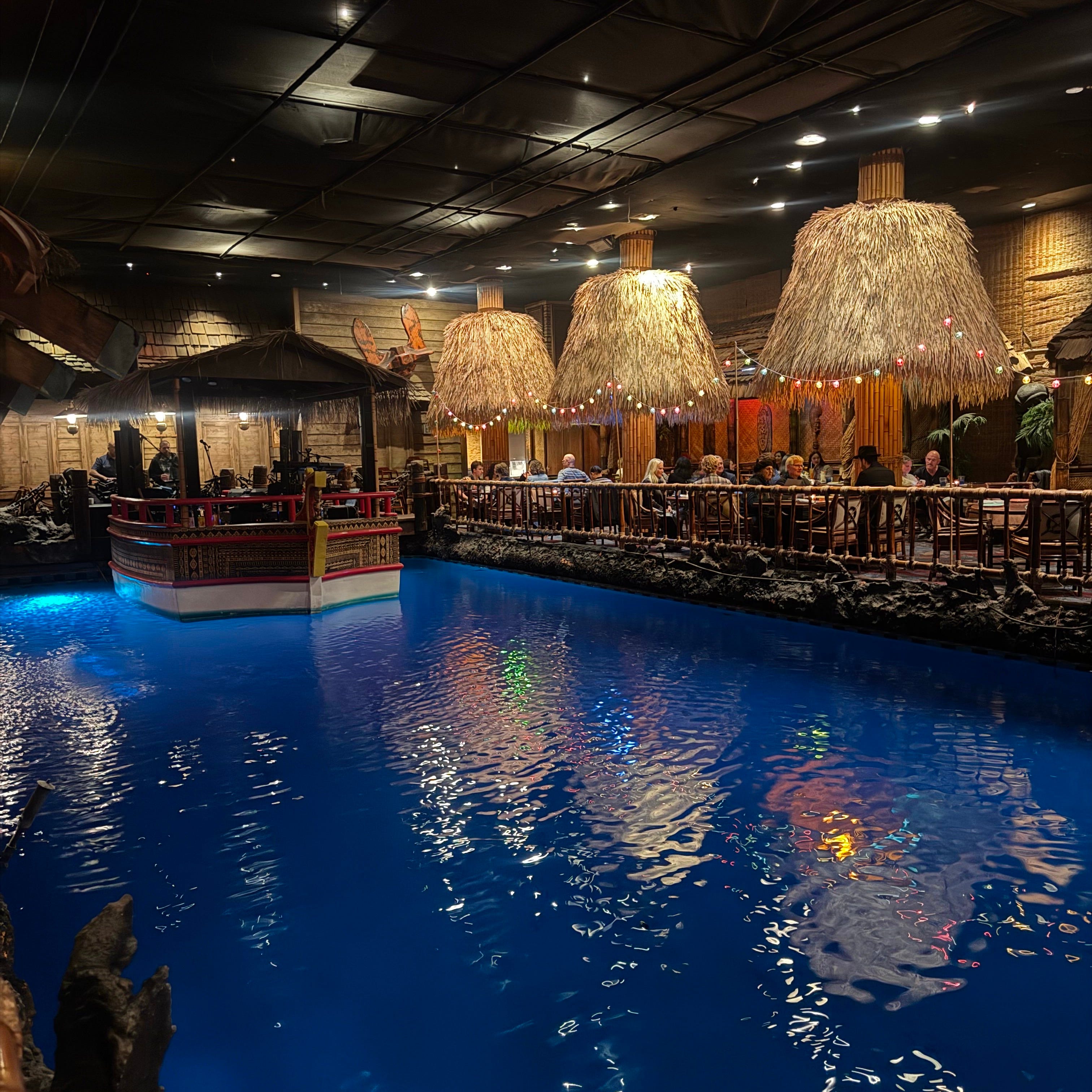
Although the Tonga Room has always been one-of-a-kind in my world, when this spot opened in the mid-1900s, tiki bars were not a unique concept.
The rise of tiki bars in America came after Prohibition, during the Great Depression, and especially boomed post-World War II. People were looking for an escape— and a fake tropical paradise for the night was just the thing.
The concept of the tiki bar originated in Hollywood with a man who went by the name “Donn Beach” (his actual name was Ernest Gantt).
He opened his bar, “Don the Beachcomber,” in 1933, based on a “romanticized vision of the South Seas,” tropical decorations, and rum-inspired drinks.
The bar boasted many of the first iterations of classic tiki cocktails, thanks to Donn’s daring innovations as a mixologist.
Don the Beachcomber is credited with inventing the Zombie — a somewhat complex cocktail with at least three kinds of rums, lime juice, Donn’s mix (cinnamon simple syrup and grapefruit juice), and more liqueurs and syrups.
The bar would also like to claim the famous Mai Tai — a tiki bar staple — as its own invention.
However, there is a long-time debate that this drink may actually belong to the Bay Area.
That is because, in 1937, after observing Donn’s success down in SoCal, a bar owner in Oakland by the name of Vic Bergeron decided to reimagine his joint as a tiki bar.
“Trader Vic’s” became the second major tiki bar in the U.S. and is often credited with inventing the Mai Tai, which is a combination of light and dark rum, orange liqueur, almond-based syrup, and lime juice.
To this day, people seem to feel passionately on both sides of the aisle in this Mai Tai debate.
Regardless, we know that Vic and Donn were both very influential when it came to the traditions and culture surrounding tiki bars.
This influence extended to the food menu. Asian cuisine (especially Chinese food) became the food of choice at tiki bars because it was considered “exotic but familiar” enough to the American palate, compared to actual Polynesian food.
What’s really interesting is that because of this integration with tiki culture, people got used to enjoying their Chinese food with a rum-based cocktail. In time, many Chinese restaurants actually started serving tiki inspired drinks because Americans now closely associated the two.
Trader Vic’s kicked off a major tiki craze across the country. Soon, every major city in America had a tiki bar.
San Francisco’s first official tiki bar, “Trad’r Sam,” opened in 1937 and is still open to this day.
All that to say that when the Fairmont decided to turn its indoor pool into a restaurant and bar in 1945, tiki bars had been around and popular for a while.
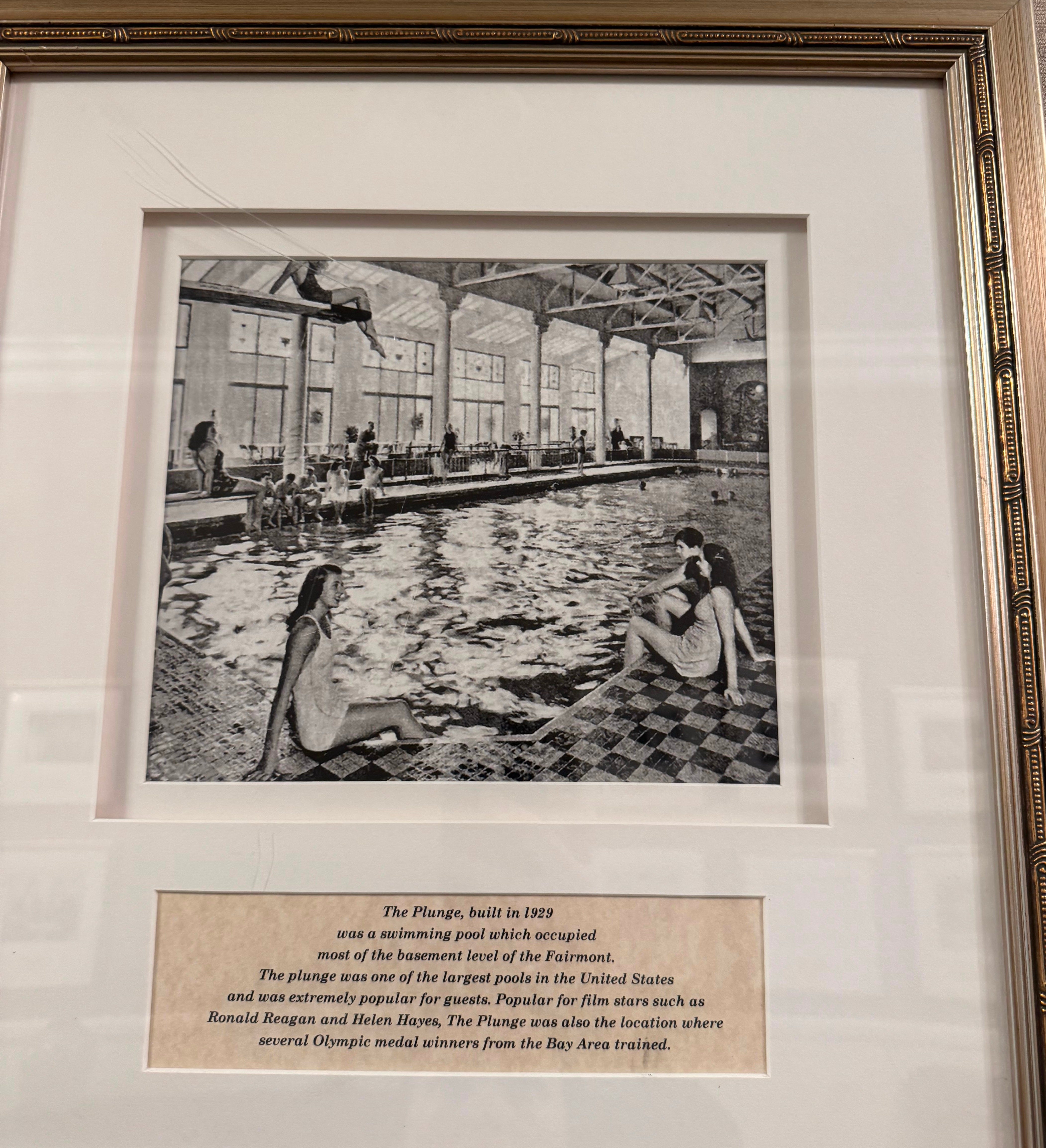
The pool (which is still the centerpiece of the room today) was once a hotspot in San Francisco called “The Plunge.” Built in 1929, the pool was popular among guests, competitive swimmers, and celebrities. Apparently Ronald Reagan and Helen Hayes both swam there.
In 1945, the hotel decided it was time to repurpose the space. The original concept for the restaurant and bar that would be built here was a “luxury cruise ship” theme. They brought in parts and pieces of old ships, life rafts, and other tchotchkes from life at sea.
This concept didn’t last, and the space would soon take up its tiki theme and settle into its Tonga Room identity.
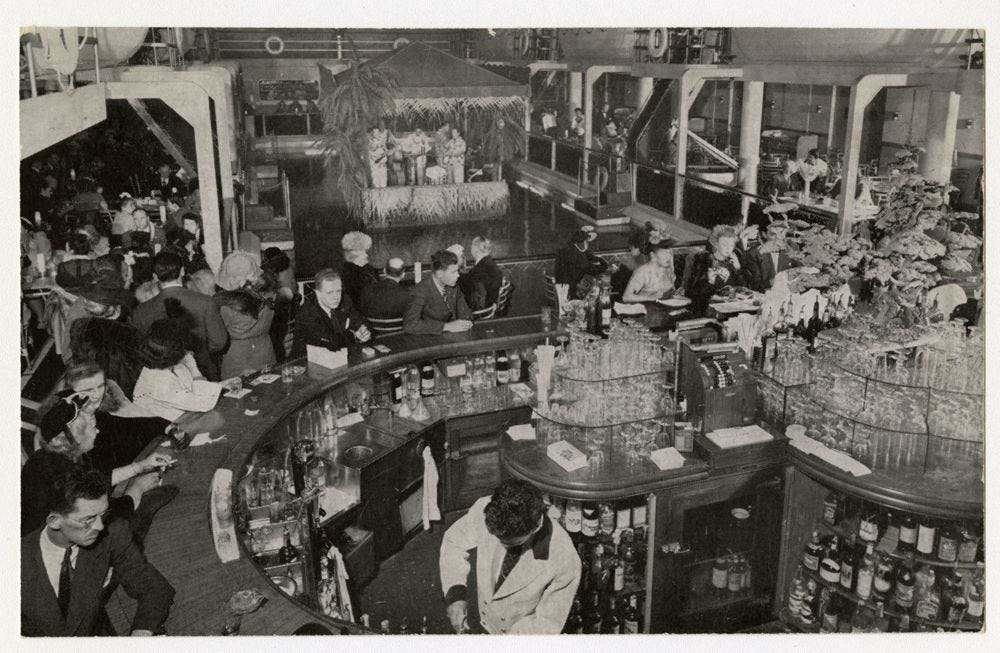


The iconic floating stage at the Tonga Room has existed pretty much since the beginning. If you’ve never seen it yourself, it is a raft— in the middle of the pool— from which the band serenades diners and drinkers, floating around the room.


And if the décor, drinks, and dancing aren’t enough, then surely the thunderstorm simulation that takes over the room every 30 minutes or so— with loud flashes, booming “thunder”, and rain showers over the pool— can turn just about any head.
It is a whole experience.
In 2009, the Tonga Room was at risk of closing down after years of waning popularity. However, it was ultimately saved and saw a large revival.
Many actually credit an Anthony Bourdain visit in 2011— where he called it “the greatest place in the history of the world’ on his show The Layover— for reinvigorating San Franciscans’ love (and tourists’ knowledge) of this spot.
Luckily the Tonga Room is around for us to enjoy today. So bring your friends! Your family! Come for Christmas. The more the merrier.
Two notes:
I’ve never tried the food here. Reviews say that I’m not missing much but I’d love to know how it is.
While I’ve heard that there have been many nights of Tonga Room past that end with drunk patrons jumping in the pool, I don’t encourage it because there is supposedly a fine ranging from $500 to $1000 to deter such an act.
Sources:
https://www.nytimes.com/2020/12/23/business/tiki-bar-history.html
https://www.fairmont-san-francisco.com/blog/tiki-culture-in-san-francisco/
https://www.fairmont-san-francisco.com/blog/tiki-legacy/
https://donbeachcomber.com/history/
Your awesome. Love these posts here and on TikTok. Best wishes for you and your media career. Life time Peninsula dweller and SF worker.